|





| |
Maha Shivratri, Shiva, Shivratri, Kal Sarp Dosh,
Rudraksha, Lord Shiva, Shivaratri, Maha Shivratri legend, Parad, Kal Sarp Dosh
Mahashivratri is on 20th February 2012
Mahashivratri - Maha Shivratri Legend
|

Please turn on the Speakers to listen "Shiv Tandava Stotram"
- favourite of Lord Shiva
|
|
|
Mahaa Shivratri
2012 is on February 20th, Monday.
The auspicious
festival of MahaShivratri falls on the 13th or the 14th night of the new moon
during the Krishna Paksha in the month of Phalgun.
Difference between
Shivratri & Maha Shivratri
Every month
there is a shivratri, i.e. every month the 13th night in the Krishna Paksha is a
Shivratri but Maha Shivratri comes in the Phalgun Month.
What is Maha
Shivratri ?
According to
Hindu Vedic System, Shivratri or 'Shiv ji's Great Night' symbolizes the
wedding day of Lord Shiva and Parvati. Many however, believe, Shivratri is the
night when Lord Shiva performed the Tandava Nritya - the dance of
primordial creation, preservation and destruction.
Celebration of
Mahaa Shivratri
Celebrating
the festival in a customary manner, devotees give a ritual bath to the Lingam
with the panchagavya - milk, sour milk, cow urine, butter and cow dung.
Celebrations of Shivratri Festival mainly take place at night. Devotees of Lord
Shiva throng Shiva temples across the country and spend ‘the Night of Lord
Shiva’ by chanting verses and hymns in praise of the Lord. The festival holds
special meaning for the ladies. They pray to Goddess Parvati also called 'Gauri',
the giver of 'suhag' for good husbands, marital bliss and a long and prosperous
married life.
Maha Shivratri and
Kaal Sarp Dosh
The day of Maha Shiv Ratri is considered very auspicious
for performing the Yajna to negate the effects of the Kaal Sarp Dosh.
Contact
Personally (on Phone) to get the Special Kaal sarp Shanti Puja (Kal Sarp Dosh
Remedy) done on 23rd Feb 2009. If you are interested in energised Kaal sarp Dosh
Niwaran Yantra then please
order now.
Legends
of MahaShivratri
There are several
legends
associated with this special grand night of Lord Shiva:
Maha Shivratri - The day of Shiva & Parvati 's
marriage :The legend of marriage of Shiva and Shakti is one the most important legends
related to the festival of MahaShivratri. The story tells us how Lord Shiva got
married a second time to Shakti, his divine consort. According to legend of
Shiva and Shakti, the day Lord Shiva got married to Parvati is celebrated as
Shivratri - the Night of Lord Shiva.
|
| |
 |
Samudra Manthan Story of Maha Shivratri:
During
Samudra Manthan by the gods and demons, a highly toxic poison came out of the
ocean. As per the advice of Lord Vishnu, gods approached Lord Shiva and prayed
him to protect life by consuming this poison.
Pleased
with their prayers, out of compassion for living beings, Lord Shiva drank this
poison and held it in his throat by binding it with a snake. The throat became
blue due to the poison (Thus Lord Shiva is also know as Neelakantha) and Shiva
remained unharmed. The wise men advised gods to keep Lord Shiva awake during the
night. To keep him awake, the gods took turn performing various dances and
playing music. A vigil was thus kept by the gods in contemplation of Shiva.
As the day
broke out, Shiva, pleased with their devotion blessed them all, and also said
that whosoever worshipped & contemplated on him on this day shall be blessed
with the fulfillment of his or her wishes. Since then, on this day and night -
devotees fast, keep vigil, sing glories of Lord and meditate.
Manifested as a Jyotirlinga on Maha Shivratri :
Manifestation
of Lord Shiva in the form of the first effulgent linga was on this special day
of Mahashivratri, and thus all devotees pray to the effulgent linga (jyotirlinga)
of Lord Shiva.
Story of Chitrabhanu:
In the
Shanti Parva of the Mahabharata, Bhishma, whilst resting on the bed of arrows
and discoursing on Dharma, refers to the observance of Maha Shivratri by King
Chitrabhanu. The story goes as follows. Once upon a time King Chitrabhanu of the
Ikshvaku dynasty, who ruled over the whole of Jambudvipa, was observing a fast
with his wife, it being the day of Mahashivratri. The sage Ashtavakra came on a
visit to the court of the king.
The sage
asked, "O king! why are you observing a fast today?" King Chitrabhanu
explained why. He had the gift of remembering the incidents of his previous
birth. The king
said to the sage: "In my past birth I was a hunter in Varanasi. My name was
Suswara. My livelihood was to kill and sell birds and animals. One day I was
roaming the forests in search of animals. I was overtaken by the darkness of
night. Unable to return home, I climbed a tree for shelter. It happened to be a
bel tree. I had shot a deer that day but I had no time to take it home. I
bundled it up and tied it to a branch on the tree. As I was tormented by hunger
and thirst, I kept awake throughout the night. I shed profuse tears when I
thought of my poor wife and children who were starving and anxiously awaiting my
return. To pass away the time that night I engaged myself in plucking the bel
leaves and dropping them down onto the ground.
"The day
dawned. I returned home and sold the deer. I bought some food for myself and for
my family. I was about to break my fast when a stranger came to me, begging for
food. I served him first and then took my food. "At the
time of death, I saw two messengers of Lord Shiva. They were sent down to
conduct my soul to the abode of Lord Shiva. I learnt then for the first time of
the great merit I had earned by the unconscious worship of Lord Shiva during the
night of Shivratri. They told me that there was a Lingam at the bottom of the
tree. The leaves I dropped fell on the Lingam. My tears which I had shed out of
pure sorrow for my family fell onto the Lingam and washed it. And I had fasted
all day and all night. Thus did I unconsciously worship the Lord. "I lived
in the abode of the Lord and enjoyed divine bliss for long ages. I am now reborn
as Chitrabhanu."
Maha shivratri Story of Lubdhak:
Another legend. There once
lived a tribal named Lubdhak, who was a devotee of Shiva. It was his usual
practice to go into the forest to collect firewood. One day he wandered deeper
than usual and night fell before he could come out. It was the night before the
no moon night and the thin crescent moon offered no light. He was not able to
find his way in the dark and soon got lost. A hungry tiger smelt him out and
with a loud roar made his intentions clear. Lubdhak knew he could not outrun the
tiger and so he climbed up a bel tree. In order to keep awake so that he would
not fall down in his sleep he began to pluck the leaves from the bel tree and
drop them one by one, each time chanting “Om Namah Shivaya”, which means I bow
down to Shiva. In this manner, he passed the night. Until dawn, he had dropped a
thousand bel leaves. When he descended the tree in the orning, he saw a lingam,
which he had missed in the dark. Unknowingly he had been dropping leaves on the
lingam. This was the 14th night of the waxing moon of the month of Phalgun and
came to be celebrated at Mahashivratri.
|
Parad
Shivlingam |
 |
|
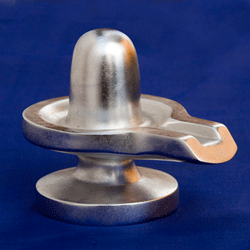
One who
worships Parad
Shivlinga devotedly, gets all worldly pleasures and at last attains
supreme destination.
Parad
Shivlingam is a form of Lord Shiva. |
|
Weight : 150 grams |
|
INR.1,500 Buy
Now |
|
|
Parad
Shiva-ling with Yoni base |
 |
|
Parad
Shivlinga with yoni is a must for every devotee of Shiva. It is believed
that even by touching the energized
Parad
Shivling, one's sins are removed. |
|
Weight : 285
grams |
|
INR.2,850 Buy
Now |
|
|
Parad
Durga Statue |
 |
|
Parad
statue of Goddess Durga represents the power of the Supreme Being that
preserves moral order and righteousness in the World.
|
|
Weight : 45 grams |
|
INR.450 Buy
Now |
|
|
Parad
Shree Yantra |
 |
|
Parad
Meru Shree Yantra is one of the most auspicious, important and powerful
Yantras, It gives the maximum benefit and proves beneficial for almost
everybody. |
|
Weight :160 grams |
|
INR.1,600 Buy
Now |
|
|
 |
|
Goddess Lakshmi is the
Goddess who governs all form of wealth and success and the paths, means
and results of all forms of prosperity. Keeping a statue of Lakshmi ji
made of
parad gives wealth for a long long time. |
|
Weight : 60 grams |
|
INR.
600 Buy
Now |
|
|
Parad
Hanuman Statue |
|
 |
|
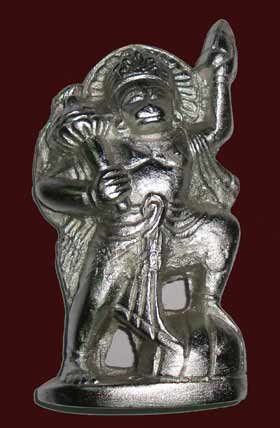
Hanuman ji is a Rudra-avtar , incarnation of
Lord Shiva. Keeping a statue of Hanuman ji made of
parad
brings peace at home and the fears of all types are removed immediately.
|
|
Weight : 60 grams |
|
INR.1,500 Buy
Now |
|
|
Parad
Ganesha Statue |
|
 |
|
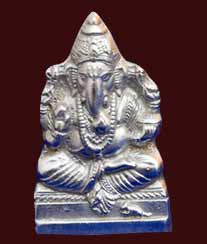
The
parad
Ganesh is very effective in removal of hurdles and miseries of life.
Ganesha is revered as the son of the Shiva and Parvati. As the god of
success, his names are chanted at the start of any important venture.
|
|
Weight : 50 grams |
|
INR.
500 Buy
Now |
|
|
Parad
Lakshmi Ganesha Statue |
|
 |
|
The
parad
Ganesh Lakshmi statue is a MUST for every home. Ganesh ji symbolizes
intellect and wisdom and Lakshmi ji symbolizes prosperity. When kept in
the puja place it bestows the native with success & prosperity. |
|
Weight : 110 grams |
|
INR.1,225 Buy
Now |
|
More
Parad
Products
|
|
Product &
Weight |
Price |
|
|
Parad
Shiv Linga - 50 grams |
INR. 500.00 |
Buy Now |
|
Parad
Shiv Linga - 70 grams |
INR. 700.00 |
Buy Now |
|
Parad
Shiv Linga - 110 grams |
INR. 1100.00 |
Buy Now |
|
Parad
Shiv Linga - 150 grams |
INR. 1500.00 |
Buy Now |
|
Parad
Shiv Linga with Yoni Base - 105 grams |
INR. 1050.00 |
Buy Now |
|
Parad
Shiv Linga with Yoni Base - 145 grams |
INR. 1450.00 |
Buy Now |
|
Parad
Shiv Linga with Yoni Base - 285 grams |
INR. 2850.00 |
Buy Now |
|
Parad
Goddess Lakshmi statue - 60 grams |
INR. 600.00 |
Buy Now |
|
Parad
Shree Yantra - Meru Yantra - 30 grams |
INR. 300.00 |
Buy Now |
|
Parad
Shree Yantra - Meru Yantra - 70 grams |
INR. 700.00 |
Buy Now |
|
Parad
Shree Yantra - Meru Yantra - 160 grams |
INR. 1600.00 |
Buy Now |
|
Parad
Ganesha statue - 50 grams |
INR. 500.00 |
Buy Now |
|
Parad
Ganesha statue - 95 grams |
INR. 950.00 |
Buy Now |
|
Parad
Hanuman statue - 40 grams |
INR. 400.00 |
Buy Now |
|
Parad
Hanuman statue - 60 grams |
INR. 600.00 |
Buy Now |
|
Parad
Hanuman statue - 95 grams |
INR. 950.00 |
Buy Now |
|
Parad
Hanuman statue - 230 grams |
INR. 2300.00 |
Buy Now |
|
Parad
Hanuman statue - 235 grams |
INR. 2350.00 |
Buy Now |
|
Parad
Goddess Durga statue - 40 grams |
INR. 400.00 |
Buy Now |
|
Parad
Goddess Durga statue - 45 grams |
INR. 450.00 |
Buy Now |
|
Parad
Lakshmi & Ganesha statue - 110 grams |
INR. 1100.00 |
Buy Now |
|
Parad
Mala -
Parad Rosary - 250 grams |
INR. 2500.00 |
Buy Now |
*
Parad
Statue, Rosary &Yantra are also available in larger size. Please contact on
Email for specific size requirements .
Maha Shivratri, Shiva, Shivratri, Kal Sarp Dosh,
Rudraksha, Lord Shiva, Shivaratri, Maha Shivratri legend, Parad, Kal Sarp Dosh
| |



|
 0091 - 9839117339 , 0091 -
9336344500 (24 x 7 Availability)
0091 - 9839117339 , 0091 -
9336344500 (24 x 7 Availability)  astro_jyotishi@yahoo.com


 Vedic Astrology
 Numerology
 Palmistry
 Graphology
 Remedies & Rituals




.jpg)
.jpg)
.jpg)
.jpg)

.jpg)
.jpg)
.jpg)


.jpg)
.jpg)